Osteoporosis can weaken your bones without changing how you feel from day to day. You may still be walking, carrying groceries, and attending your usual exercise class with no obvious sign of a problem. Some people learn they have osteoporosis through a bone density test. Others find out after breaking a bone.
After a diagnosis, everyday activities can bring up new questions. Is your usual exercise routine still suitable? Should you change how you lift something heavy? If you’ve had a fracture, you may also wonder when and how to start moving again. Advice to stay active becomes more useful when you understand what that can look like for you.
Physiotherapy can help you make sense of those decisions. A physiotherapist can guide you through exercises for strength, balance, and posture, and suggest ways to adapt daily activities. Alongside nutrition and medical treatment when needed, this support can help you stay active while taking your bone health into account.
Note: This is general information and does not replace medical advice, diagnosis, or treatment. Speak with a qualified healthcare professional before changing your exercise routine or treatment, especially after a fracture.
Osteoporosis symptoms and signs to watch for
Your body replaces old bone with new bone throughout your life. When it loses more bone than it builds, your bones can become weaker and more likely to break. In the spine, a weakened bone can collapse or flatten. This is called a vertebral compression fracture.
You usually cannot feel this bone loss happening. A bone density test may show a problem before a bone breaks. Signs to discuss with your doctor include:
- A broken bone after a minor fall. A bone that breaks after a fall from standing height or another small force may be a fragility fracture.
- Losing height or noticing a change in posture. Compression fractures can make you shorter or change the curve of your spine. You may notice a more rounded upper back or less curve in your lower back.
- Back pain from a fracture in the spine. A compression fracture may happen after a fall, including landing on your bottom. It can also happen during an everyday movement, such as lifting. These fractures can cause severe pain, although some cause little or no pain.
If you have osteoporosis and develop new back pain after a fall or a small movement, seek medical assessment. Losing height or noticing a change in posture also deserves a check, even without pain.
Understanding your bone density test
A bone mineral density test measures the amount of minerals in your bones. The most common test is a DXA scan, which usually checks your hip and spine.
Your report may include a T-score. This compares your bone density with that of a healthy young adult. A lower score means lower bone density. You may also see the word osteopenia, which means low bone density that is less severe than osteoporosis.
Your doctor looks at more than the scan result when checking your chance of breaking a bone. Your age, past fractures, medications, and family history also help guide decisions about care.
Ask what your result means for you and when you should have another bone health check. Mention any exercises or daily activities you’re unsure about, especially if you’ve recently had a fracture.
How physiotherapy can help you stay active with osteoporosis
Having osteoporosis can leave you unsure about which exercises to do or how much to challenge yourself. A physiotherapist can help you choose exercises and make changes based on your abilities, bone health, and any past fractures.
If osteoporosis runs in your family, strength and balance exercises can help support your bone health as you age. You don’t have to wait for a diagnosis to ask a physiotherapist about suitable exercises.

Building strength and supporting posture
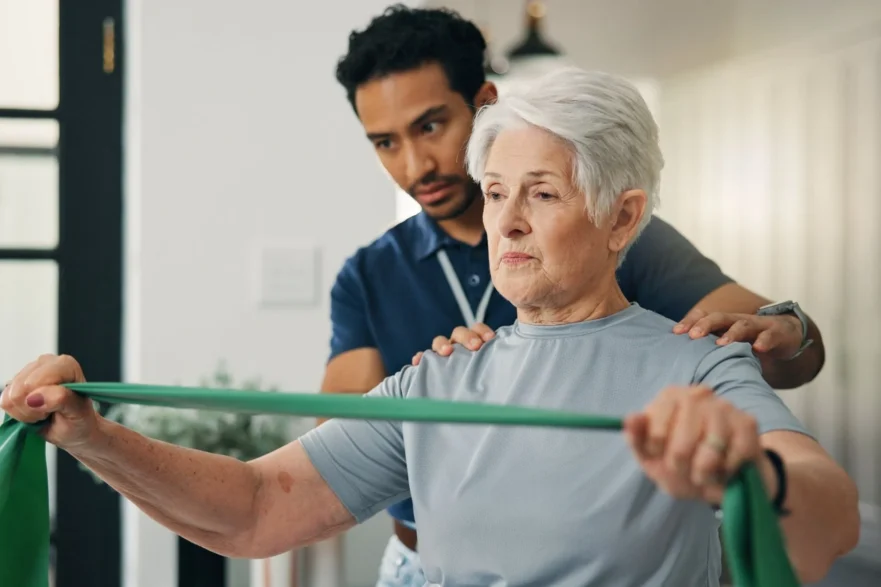
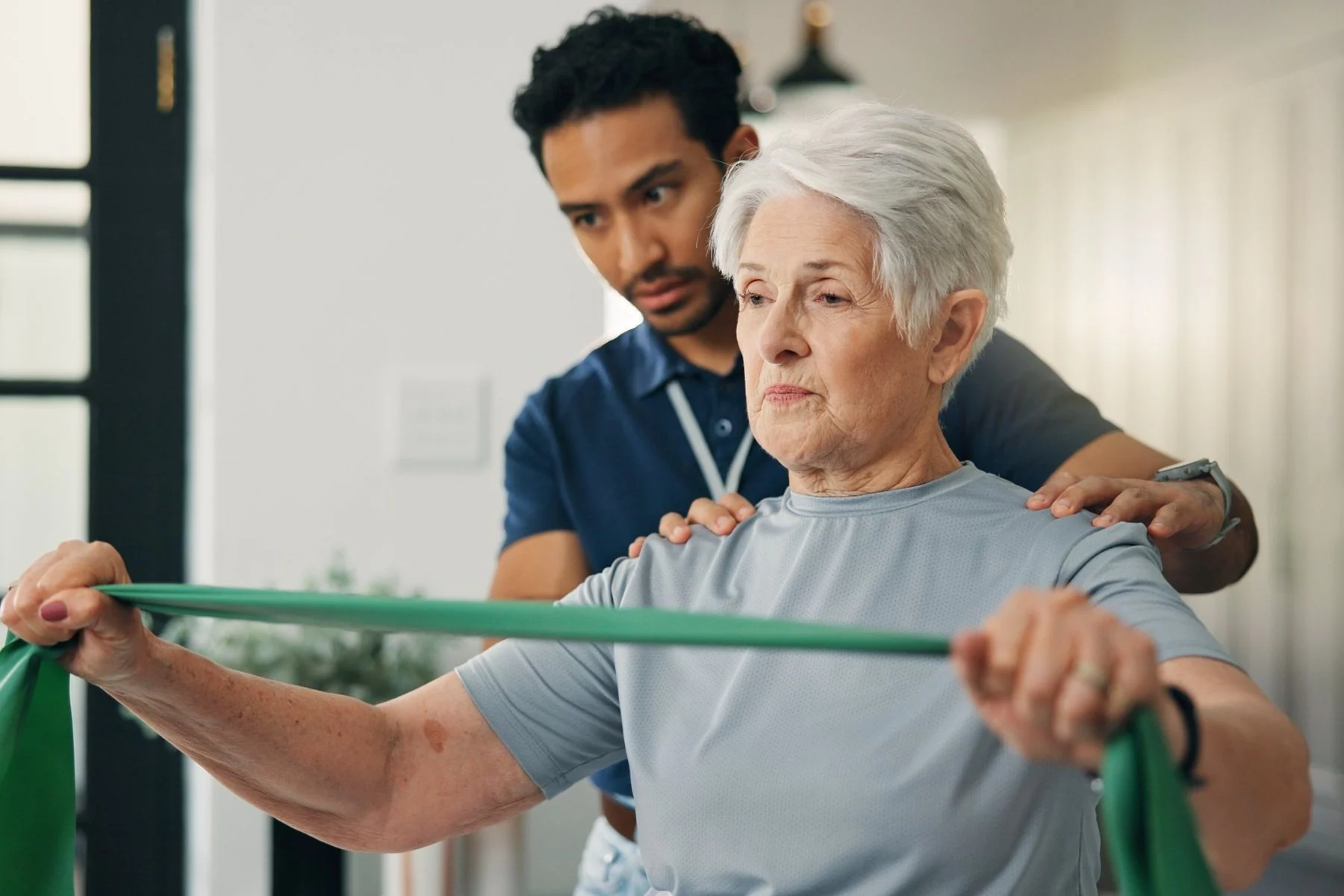
Strength exercises make your muscles work against resistance, such as an exercise band, weights, or your body weight. This puts a controlled load on your bones, which can help maintain or improve bone density. Stronger muscles can also help with tasks such as getting out of a chair or carrying groceries.
Exercises for your back and abdominal muscles can support your spine and help you work on posture. These are often called your core muscles.
A physiotherapist can show you which exercises are suitable, guide your technique, and adjust the difficulty over time. They can also account for any movements or activities your healthcare team has asked you to limit after a fracture.
Improving balance and reducing fall risk
Balance exercises and agility exercises help your muscles and nervous system work together so you can stay steady or regain your balance. This may include practicing a change in direction or shifting your weight, with support when needed.
Your physiotherapist may also suggest exercises to strengthen the muscles in your feet and toes as part of your balance training.
Making everyday activities easier to manage
Tell your physiotherapist what you enjoy doing and which tasks have become difficult. For example, carrying laundry involves bending, lifting, and turning. Explaining which part feels awkward or makes you hesitate gives you something specific to work on together.
Some movements may need to change, especially after a fracture in your spine or when your chance of a fracture is high. Your physiotherapist can show you ways to adjust how you bend, turn, or lift while following any advice from your healthcare team.
Making your home easier to move around can help, too. Good lighting, clear walking paths, and support for balance concerns can help reduce the chance of a fall.
Food, supplements, and medication for osteoporosis
Getting calcium and vitamin D
Calcium helps keep bones strong. Vitamin D helps your body absorb calcium. Milk, yogurt, plant-based drinks with added calcium, and some types of tofu can provide calcium. Check labels, as amounts vary between products.
A healthcare professional can help you check how much calcium you get from food and whether you need a supplement. Extra calcium supplements are generally unnecessary if you already get enough. Ask about vitamin D, too, and bring a list of supplements you take so the amounts can be checked.
Understanding your medication
Your doctor may recommend medication to lower your chance of breaking a bone. Feeling well does not show whether you need medication or whether it is working. Ask about the expected benefits, possible side effects, and when to follow up.
Check with the healthcare professional who prescribed your medication before stopping it or delaying a dose. Some osteoporosis medications need a specific plan if you stop or take them late.
Key takeaways
- Osteoporosis can weaken bones without causing symptoms, so feeling well does not tell you how strong your bones are.
- Your bone density test and health history help your doctor decide what care you may need.
- Resisted strength training and balance exercises can help improve bone density and reduce your risk of fall and fractures
- A physiotherapist can help you choose exercises and adjust activities to suit your bone health.
FAQs
Can men develop osteoporosis?
Men can develop osteoporosis, too. A doctor can review your age, past fractures, medications, and other health concerns to help decide whether you need testing or treatment.
When should I ask about a bone density test?
Bone density testing is generally recommended for adults aged 70 and older. You may need a test earlier because of past fractures, certain medications, or other risk factors. If you break a bone after a minor fall, ask your doctor about your bone health rather than waiting until you reach a certain age.
Can I exercise after a fracture caused by osteoporosis?
Exercise may be part of your recovery. What you can do and when you can begin depend on which bone was broken and how it is healing. Your healthcare team can guide you, and a physiotherapist can help you adjust exercises as you recover.
Can physiotherapy help with osteoporosis?
Physiotherapy can help you work on strength, balance, posture, and daily movement. A physiotherapist can also suggest changes to exercises and activities based on your bone health and any past fractures. Nutrition and medical treatment may be needed alongside this support.
Find a clinic near you or book online to schedule an appointment with a clinician.
This blog originally appeared on Lifemark.ca.
Sources
- Osteoporosis Canada, Signs and symptoms.
- National Institute of Arthritis and Musculoskeletal and Skin Diseases, Bone mineral density tests: what the numbers mean.
- Morin, S.N., Feldman, S., Funnell, L., et al., Clinical practice guideline for management of osteoporosis and fracture prevention in Canada: 2023 update.
- Giangregorio, L.M., Papaioannou, A., Macintyre, N.J., et al., Too Fit To Fracture: exercise recommendations for individuals with osteoporosis or osteoporotic vertebral fracture.
- Ontario Osteoporosis Strategy, Exercise guidelines.
- Osteoporosis Canada, Calcium.
- Osteoporosis Canada, Calcium food sources.
- Osteoporosis Canada, Vitamin D.
- Osteoporosis Canada, Bone mineral density testing.