
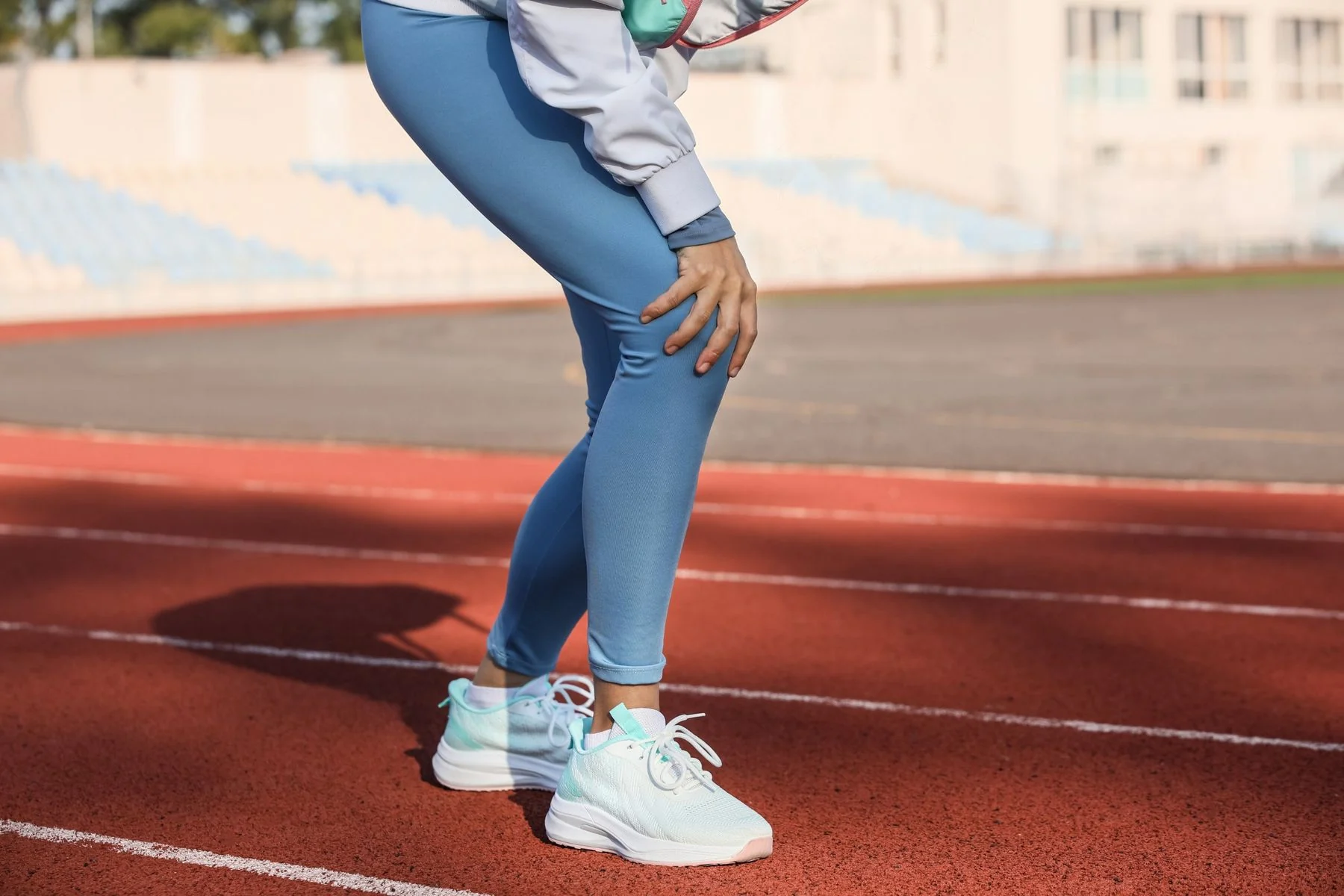
Maybe the first few kilometres of your run feel comfortable, but your knee begins to ache on the way home. Or perhaps you finish without any pain, only to notice it when you take the stairs the next morning. Either way, it can be frustrating to experience knee pain when running is how you stay active, clear your head, or work toward a personal goal.
Knee pain does not always mean you need to give up running. The next step depends on your symptoms, what may be causing them, and how your knee responds to activity. Knowing what to look for, how to adjust your training, and when to seek professional support can help you make informed decisions about staying active.
Note: This article offers general information, not a diagnosis or individualized treatment advice. For guidance suited to your health and goals, speak with a physiotherapist or another qualified healthcare professional.
Common causes of knee pain when running
Your knees help manage force each time your foot lands, working alongside your hips, ankles, and feet. It is normal for your muscles to feel tired after a challenging run, but pain that keeps returning deserves attention. The location of the discomfort can offer clues, although it cannot tell you the cause on its own.
Pain around or behind the kneecap
An ache around or behind the kneecap may be linked to patellofemoral pain, often called “runner’s knee.” You might notice it during a run, while squatting, when going downstairs, or after sitting with your knees bent for a long time.
Pain on the outside of the knee
If the pain is mainly along the outside of the knee, iliotibial (IT) band syndrome is another possibility. The IT band is a thick band of tissue running along the outside of your thigh, and repetitive activities such as running and cycling can irritate the area.
Pain just below the kneecap
Discomfort just below the kneecap can sometimes be related to patellar tendinopathy, also called “jumper’s knee.” The patellar tendon connects your kneecap to your shinbone and helps your leg handle movements such as running, jumping, and squatting.
Because symptoms can overlap, the location of your pain alone cannot confirm the cause. A healthcare professional can assess your knee and help determine what may be contributing to your symptoms.
How training changes can place more demand on your knees
Knee pain can follow an injury, but it can also build gradually. Imagine you usually run five kilometres a few times a week. As you feel fitter, you add a longer weekend run, increase your pace, or choose a hillier route. Each change may seem small on its own, but together they increase the demands on your legs.
The distance, frequency, and intensity of your running make up your training load. If that load increases faster than your body can comfortably adapt, discomfort or an overuse injury may develop. Building your running distance gradually and allowing time for recovery can help you manage that demand.
Other factors can also affect how your knees respond, including previous ankle injuries, limited recovery between workouts, and changes in strength.
For example, returning to running after an ankle injury may change how you move. You might also notice knee discomfort after adding hills to a route that was previously comfortable.
Think about what changed in your training before the pain started. Sharing those details with your physiotherapist may help identify contributing factors.
The role of strength and movement in running
How you move matters alongside how much you run. Clinicians use the word biomechanics to describe how your joints, muscles, and other parts of the body move and work together during an activity. With each stride, your hips, knees, ankles, and feet share the work of supporting your body and moving you forward.
A difference in hip strength, ankle mobility, or the way you control a movement can influence the demands placed on your knee. However, there isn’t one perfect running technique that works for everyone.
If movement patterns appear to be contributing to your symptoms, a physiotherapist can help you decide whether strengthening, mobility work, or a change in technique may be useful.
How to adjust your running when your knee hurts
When knee pain starts, you may feel caught between pushing through and stopping altogether. Some runners can continue with temporary changes, while others need a break from running.
The right approach depends on your symptoms, their likely cause, and how your knee responds during and after activity.
Depending on your symptoms and any advice you have received from a healthcare professional, temporary adjustments may include:
- Shorter or easier runs: reducing distance or pace to place less demand on irritated tissues.
- Flatter routes: temporarily avoiding hills if climbing or descending makes symptoms worse.
- More recovery time: allowing longer breaks between runs and easing off speed sessions or other harder workouts.
Notice how your knee responds later that day and the next morning. Pain that lasts longer after each run, becomes more intense, or starts affecting walking or stairs may mean your current routine is too demanding.
If running continues to aggravate your symptoms, you may be able to maintain some activity through comfortable walking, swimming, or cycling. Cycling can also aggravate certain knee conditions, including IT band syndrome, so choose activities according to your symptoms and clinical advice.
Avoid pushing through pain that is getting worse. If you’re unsure how much activity is appropriate, a physiotherapist can help you plan your next steps.
When you should seek help for knee pain
Not every sore knee needs urgent care, but some symptoms should not be managed by simply changing your training.
Seek urgent medical attention if you:
- Cannot stand or put weight on your knee.
- Cannot move your knee or it appears deformed.
- Develop severe pain or rapid, significant swelling after an injury.
- Have a hot, red, swollen knee, particularly with fever or feeling generally unwell.
Knee instability, recurring pain, or symptoms that are getting worse or interfering with your daily activities also deserve a professional assessment.
How physiotherapy can support your return to running

A physiotherapy assessment gives you an opportunity to talk about what has changed, what hurts, and what you want to get back to.
Your physiotherapist may ask about your running schedule, past injuries, footwear, and how your knee feels during everyday tasks. They may also assess knee movement, hip and leg strength, balance, walking, squatting, or your running technique when appropriate.
From there, you can work together on a plan that fits your symptoms and goals. It may involve specific strengthening exercises, strategies to improve movement, and guidance on when or how to adjust your running. Progression can be gradual, with changes guided by your comfort, function, and response to activity.
This plan will look different for every runner. If you are training for your first 5K, you may want to rebuild your distance at a manageable pace. If you are preparing for a marathon, you may need to adjust your schedule while maintaining your fitness.
And if your favourite run is a relaxed loop around the neighbourhood, your goal may simply be to feel more comfortable and confident while running.
Your goals and daily activities should help shape your care.
Getting back to the runs you enjoy
Whether you run for a race, your health, or a bit of fresh air, persistent knee pain can take the enjoyment out of it. Understanding your symptoms and getting guidance when you need it can help you make informed decisions about staying active and returning to running.
Key takeaways
- Knee pain during or after running can have several possible causes, including patellofemoral pain, IT band syndrome, and patellar tendinopathy. An assessment can help identify the cause.
- Changes in training distance, pace, frequency, or terrain may contribute to knee discomfort, particularly when recovery time is limited.
- Strength, mobility, and movement patterns can influence how your knees respond to running.
- You may be able to stay active with temporary training adjustments, depending on your symptoms.
Persistent or worsening pain deserves attention. Severe pain, inability to bear weight, or signs of infection require urgent medical assessment.
FAQs
Why does my knee hurt after running but not during?
The repeated load of running may irritate sensitive tissues even if you feel comfortable during the activity. Pain or stiffness can become more noticeable later, particularly after sitting or when using stairs. A recent increase in distance, pace, or hills may be contributing, but an assessment is needed to understand the cause.
Do I need to stop running if my knee hurts?
You may not need to stop running entirely. Some people can keep running with changes to distance, pace, or training intensity. If pain is worsening or interfering with your usual activities, pause your runs and arrange an assessment. Seek urgent medical care if you cannot bear weight or develop severe swelling or other warning signs.
Can the wrong running shoes cause knee pain?
Footwear can affect comfort and how your feet meet the ground, but shoes are not always the cause. Training changes, past injuries, strength, and movement patterns may also contribute. A physiotherapist can help you decide whether different footwear is worth considering.
Can physiotherapy help with running-related knee pain?
Physiotherapy may help you understand why your knee hurts, identify factors you can change, and build a plan to improve strength, movement, and confidence as you work toward running again.
Find a clinic near you or book online to schedule an appointment with a clinician.
This blog originally appeared on Lifemark.ca.
Sources
- HealthLink BC. Knee Problems and Injuries.
- HealthLink BC. Patellofemoral Pain Syndrome.
- HealthLink BC. Iliotibial Band Syndrome.
- MyHealth Alberta. Patellar Tendinitis (Jumper’s Knee): Exercises.
- MyHealth Alberta. Knee Pain or Injury: Care Instructions.